
Key Findings

The prevalence of FGM/C among women in Oman is 78%

More than 37% of women in Oman’s capital city, Muscat, are against its continuation. Support for FGM/C is much greater in regions with high prevalence such as Al Dakhiliyah, where support reaches 86% amongst women.


Geography

The region with the highest prevalence is the Al Dakhiliyah governorate. Located in the centre of the country and southwest of the capital Muscat, Al Dakhiliyah has a reported FGM/C prevalence rate of 95.5% in 2017.

Age

48.2% of women with FGM/C do not know at what age they were cut. Of the women who do know, 24.7% were between the ages of 1-5 years at the time of their FGM/C. For the women with no remembrance, it can be assumed that they were cut at a very early age.

Type

The type of FGM/C performed is dependent on the region. In the Southern province of Dhofar Type II is considered to be most commonly practised, whereas Type I is most common in Muscat.

Agent

73% of FGM/C in Oman is carried out by traditional cutters and practitioners.

Distribution of FGM/C across Oman

Studies on FGM/C in Oman have typically focused on pockets in Dhofar and mountainous areas in the North. However, studies published in the last 10 years have evidenced the practice occurring across the country at a rate greater than previously expected.

The region was the highest rate of prevalence is Al Dakhiliyah, which had a reported FGM/C rate of 95.5% in 2017. Al Dakhiliyah is located in the centre of Oman and is considered one of the Sultanate’s most dynamic economic governorates.

Women from the capital city of Muscat are less likely to experience FGM/C, yet the practice is occurring in the city. More than half of women from this region reported experiencing FGM/C in al Hinai’s 2013 study.
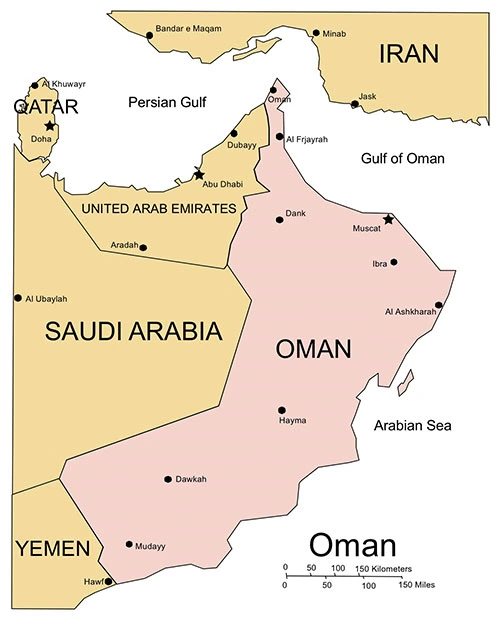
Distribution of FGM/C across Oman

Click on the map to enlarge

FGM/C Legislation in Oman

Article 4 of Oman’s Executive Regulations for the Child Law (as amended by Ministerial Decision 125/2019) specifically addresses FGM/C and provides for prosecution of health professionals, guardians and anyone else who carries out FGM/C on a child under 18 years of age.  For women over 18 (and girls under 18) Articles 306-309 of the Omani Penal Code (2018) deal with crimes of assault ranging in severity which includes the removal of any organ of the victim.

Development Indicators

Population

5,494,691 (2025)

Infant Mortality

13.9 deaths per 1,000 live births (2024)

Maternal Mortality

13 deaths per 100,000 live births (2023)

SDG Gender Index

Oman not presented in 2024 dataset

facebook twitter linkedin instagram