
Home | Research & Resources | Iran
Key Findings
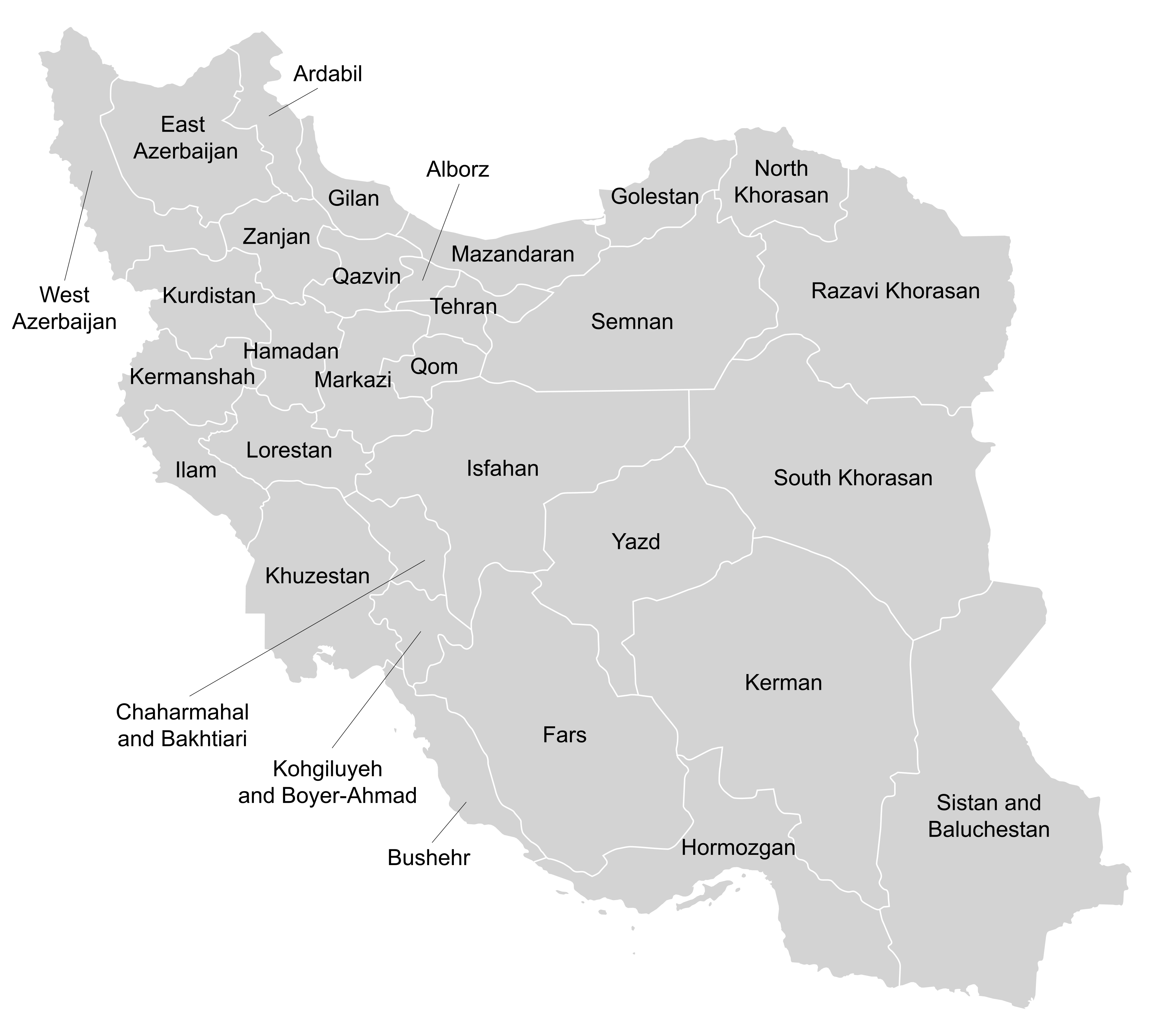
The prevalence of FGM/C among women aged 15-49 in Iran varies between provinces. Prevalence rates are highest in the Hormozgan province, particularly Qeshm island with a rate of 61%. The region of West Azerbaijan has a prevalence rate of 21% while Kermanshah and Kurdistan report lower rates of FGM/C, 18% and 16% respectively.
Support for FGM/C is greater in regions with high prevalence rates. 44% of women in the Hormozgan region support FGM/C. However, in the Kermshah region support is significantly lower with only 19.2% of women in favour of the practice’s continuation. Western Azerbaijan and Kurdistan have similarly low rates of support.
Geography
The regions with the highest prevalence lie in the southern provinces of the country.
Age
The age of girls at the time of their FGM/C varies by region. In the southern region of Hormozgan, the practice often occurs before the age of 10 years. Whereas in Kurdish communities, girls are typically cut when they are older from 16-17 years up to 21 years.
Type
87.4% of women in the Hormozgan province experience Type I FGM/C. Type II is the second most common type of cut.
Agent
Almost all FGM/C is carried out by ‘traditional practitioners’, however in some regions the practice is more commonly performed by Roma groups.
Distribution of FGM/C across Iran
Sunni minority communities across Iran are significantly more likely to practice FGM/C than their Shia counterparts. This is due to the misconception in certain Sunni communities that the practice is a religious obligation.
The region with the highest prevalence of FGM/C in Iran is located in the Southern province of Hormozgan. Made up of 14 major islands, this region reports the highest prevalence in Qeshm island with a rate of 61% amongst women aged 30-49 years.
Areas located in the western region, such as Kermanshah, West Azerbaijan and Kurdistan report lower levels of prevalence, although still significant. By 2014, prevalence averaged 21% in West Azerbaijan, 18% in Kermanshah and 16% in Kurdistan.
Across all regions in Iran, FGM/C prevalence is significantly higher amongst women aged 30-49 compared to women aged 15-29, indicating a trend toward abandonment amongst the younger generation.
FGM/C Legislation in Iran
Although there is no specific legislation criminalising FGM/C, Iran’s Penal Code (2016) provides for prosecution under Article 663 that imposes a financial penalty for damaging female genitalia, and Article 386 provides for punishment for violation of any organ of the body. Within the Law on Protection of Children and Adolescents (2020) FGM/C may be regarded as a form of child abuse, and a woman may make a complaint against a perpetrator of FGM/C under the Law of Women’s Rights and Responsibilities as it damages her right to good and safe physical and psychological health.
Development Indicators
Population Growth
89,550,997 (as of August 2025), with a 1.27% growth rate (2025)
Infant Mortality
14.3 deaths per 1,000 live births (2024)
Maternal Mortality
16 deaths per 100,000 live births (2023)
SDG Gender Index
102 out of 139 countries (2022)